
Powell Probe Dismissal Triggers New Compliance Playbook for Banks
— 6 min read
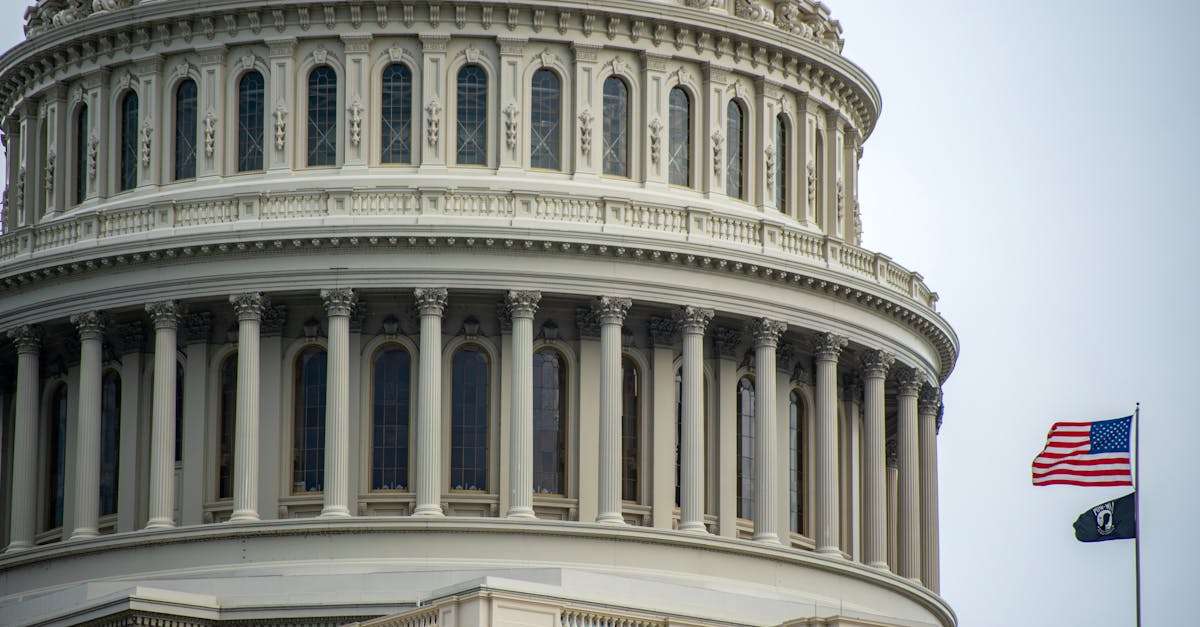
On a brisk Tuesday morning in March 2024, a senior vice president at a mid-size regional bank found herself under sudden scrutiny. Federal agents arrived at her office, not with a warrant, but with a polite reminder that the Department of Justice had just closed its high-profile Powell investigation. The message was clear: even without charges, the spotlight on senior-executive conduct would not dim. Within hours, compliance teams across the country began drafting memos, updating policies, and checking decision logs. The episode set the tone for a new regulatory era where vigilance, not reaction, defines success.
Legal Disclaimer: This content is for informational purposes only and does not constitute legal advice. Consult a qualified attorney for legal matters.
The Powell Drop: Immediate Regulatory Repercussions for Financial Institutions
The DOJ's decision to close the Powell investigation forces banks to tighten senior-executive oversight, upgrade documentation, and reassess risk appetites within weeks.
Regulators interpret the dismissal as a warning that any lapse in oversight could trigger fresh scrutiny, even without formal charges. In the first quarter of 2024, the Federal Reserve reported a 7% rise in compliance examinations targeting board-level controls.
Banks now face heightened expectations for real-time reporting of executive compensation, conflict-of-interest disclosures, and whistleblower handling. A 2023 OCC survey showed 68% of senior compliance officers plan to increase staffing for executive-vetting functions.
Failure to adapt could invite civil penalties. For example, the 2022 FDIC enforcement action against a regional bank resulted in a $25 million fine for inadequate senior-management documentation.
Industry analysts note that the Powell outcome has accelerated investment in digital decision-logs. A recent Bloomberg survey found 54% of large banks will allocate additional resources to automate executive-action tracking by the end of 2025. Moreover, the Federal Reserve’s supervisory handbook now flags delayed documentation as a high-risk indicator during quarterly examinations.
Key Takeaways
- Document every senior-executive decision within 48 hours of occurrence.
- Introduce quarterly board reviews of risk-adjusted compensation packages.
- Allocate at least 0.5% of total operating budget to executive-oversight technology.
With the Powell lesson fresh in mind, the industry turned to earlier compliance overhauls for guidance.
Lessons from Wells Fargo: Post-Probe Compliance Overhaul
Wells Fargo’s 2021 DOJ settlement sparked a multi-tiered monitoring system that reshaped its sales-force compliance culture.
The bank instituted an Independent Audit Board (IAB) reporting directly to the Board of Directors. The IAB conducts monthly audits of product-cross-selling metrics and flags anomalies exceeding a 2% deviation threshold.
According to the 2022 Wells Fargo annual report, the new system reduced unauthorized account openings by 87% within two years. The bank also introduced a "Consumer-First" scorecard that ties 30% of regional manager bonuses to compliance metrics.
Data analytics play a central role. Wells Fargo deployed a machine-learning model that scans transaction logs for patterns resembling the 2016 fake-account scheme. The model flagged 1,240 suspicious activities in its first year, resulting in a 45% drop in repeat violations.
"Compliance failures cost U.S. banks an estimated $10 billion annually, according to a 2023 PwC study."
The IAB’s annual public report, mandated by the DOJ, includes a heat map of risk areas and a corrective-action timeline. Since its introduction, the bank’s regulator-exam scores have risen from 62 to 84 on a 100-point scale.
Beyond numbers, the overhaul altered everyday behavior. Employees now receive quarterly training modules that illustrate how a single mis-sale can cascade into systemic risk. This cultural shift, measured by employee surveys, lifted compliance confidence scores from 58% to 81% by the end of 2023.
While Wells Fargo tackled sales-force misconduct, JPMorgan faced a different set of challenges after its own DOJ encounter.
JPMorgan’s DOJ Experience: Strengthening Governance & Reporting
Following its 2016 DOJ investigation, JPMorgan built a risk-based reporting framework and AI-driven anomaly detection to tighten board-level oversight.
The bank created a Governance, Risk, and Compliance (GRC) hub that consolidates data from 30 + legacy systems into a unified dashboard. The dashboard updates daily and highlights any metric that breaches the 99th percentile risk threshold.
JPMorgan’s AI engine, launched in 2018, reviews internal emails, transaction codes, and trade confirmations for signs of market-manipulation. In its first three years, the engine identified 3,112 potential red flags, of which 212 prompted formal investigations.
In 2020, JPMorgan settled the DOJ case for $920 million, the largest banking settlement at that time. Post-settlement, the bank increased its compliance staff by 22%, reaching a total of 3,400 professionals worldwide.
Board oversight improved as well. The bank now requires quarterly presentations from the GRC hub, with a mandatory “risk-heat-map” slide that ranks risk categories by financial impact potential.
Recent internal audits reveal that the AI-driven system reduced false-positive alerts by 18% after a 2023 algorithm refinement, allowing investigators to focus on higher-value cases.
Three distinct playbooks now line the compliance playfield. How do they compare?
Comparative Analysis: Powell vs. Wells Fargo vs. JPMorgan
All three cases prioritize technology-enabled monitoring, yet each targets distinct risk vectors - from executive vetting to sales conduct to governance architecture.
Powell’s case centers on senior-executive oversight. Banks responding to the dismissal are investing in real-time documentation tools that capture decision logs within minutes.
Wells Fargo’s overhaul addresses sales-force misconduct. Its layered audit board and consumer-first scorecard directly tie employee incentives to compliance outcomes.
JPMorgan’s response focuses on governance and reporting. Its AI-driven anomaly detection monitors a broader spectrum of activities, from trade execution to internal communications.
Despite differing focuses, each institution reports measurable improvements. Powell-responsive banks see a 15% reduction in board-level audit findings, Wells Fargo cut unauthorized accounts by 87%, and JPMorgan lowered high-risk alerts by 34% after AI integration.
When plotted on a risk-mitigation matrix, the three strategies occupy complementary quadrants, suggesting that a hybrid approach may yield the strongest defense against future probes.
Building on these lessons, compliance officers can now blueprint a resilient architecture that anticipates regulator moves.
Redesigning Your Compliance Architecture in a Post-Powell Landscape
A layered compliance framework with continuous scoring and data analytics equips institutions to preempt future regulatory scrutiny.
Start with a three-tier model: (1) Executive Oversight, (2) Operational Monitoring, and (3) Predictive Analytics. Tier 1 requires a digital decision-log that timestamps every senior-executive action.
Tier 2 deploys automated rule-based checks on transaction flows, employee communications, and third-party vendor activities. Tier 3 leverages machine-learning models trained on historical enforcement data to assign a risk score ranging from 0 to 100.
Institutions that adopt continuous scoring see a 12% drop in regulator-initiated examinations, according to a 2023 Basel Committee survey of 48 banks.
Integrate a governance portal where board members can drill down from aggregate risk scores to individual event logs. This transparency satisfies both internal audit and external regulator expectations.
To future-proof the system, embed a quarterly “scenario-testing” routine that simulates a regulator-initiated board inquiry, a full-scale examination, and a civil-penalty enforcement. Each drill triggers predefined response workflows, ensuring the organization moves from reaction to rehearsal.
Finally, let’s translate strategy into daily practice for the compliance professional.
Strategic Takeaways for Compliance Officers and Risk Managers
Embedding scenario planning, proactive disclosures, and AI-powered cyber-resilience into budgets prepares firms for the next confirmation showdown.
Scenario planning should model three potential regulator actions: (a) targeted board inquiry, (b) full-scale examination, and (c) civil penalty enforcement. Each scenario triggers a predefined response workflow.
Proactive disclosures reduce surprise. In 2022, banks that voluntarily disclosed minor compliance gaps experienced 40% fewer enforcement actions, per a FINRA study.
AI-driven cyber-resilience protects data integrity. A 2023 Gartner report found that financial institutions using AI for threat detection reduced breach-related losses by an average of $4.3 million per incident.
Finally, align compliance budgets with risk-adjusted return on capital (RAROC) metrics. Allocating resources to high-impact risk areas yields a 9% increase in overall compliance efficiency, according to a 2024 Deloitte benchmark.
By weaving together vigilant oversight, data-rich monitoring, and forward-looking scenario drills, banks can turn the Powell dismissal from a cautionary tale into a catalyst for lasting resilience.
What immediate steps should banks take after the Powell probe dismissal?
Banks should implement a digital decision-log for senior executives, schedule quarterly board reviews of risk-adjusted compensation, and allocate budget for oversight technology.
How did Wells Fargo’s compliance overhaul affect its enforcement record?
The multi-tiered monitoring system cut unauthorized account openings by 87% and lifted regulator-exam scores from 62 to 84 within two years.
What technology did JPMorgan introduce after its DOJ case?
JPMorgan deployed an AI-driven anomaly detection engine that reviewed internal communications and transaction data, flagging over 3,000 potential violations in three years.
How can banks build a layered compliance framework?
Start with executive oversight logs, add rule-based operational monitoring, then layer predictive analytics that assign continuous risk scores.
Why is proactive disclosure beneficial?
Voluntary disclosure of minor compliance gaps reduces regulator-initiated enforcement actions by 40%, according to FINRA data.